
Table of Contents (11 sections)
Writing is an art form that has evolved over centuries, becoming a vital mode of communication in society. To attain writing mastery, one must delve into various techniques that enhance clarity, creativity, and engagement. In this article, we explore five essential techniques to elevate your writing skills and help you communicate effectively.
1. Embrace the Power of Outlining
Creating an outline is a foundational step towards effective writing. It provides structure and clarity, helping writers organize their thoughts before pen meets paper. An outline acts as a roadmap, guiding the writer through their ideas. According to a study by Purdue University, students who outline their work often achieve higher grades and produce clearer writing. Here’s a simple method to create an effective outline:
- Identify your main idea: What is the purpose of your writing?
- Break it down: List supporting ideas or arguments.
- Prioritize: Organize points in a logical sequence.
- Refine: Flesh out each point with details and examples. This technique not only enhances writing clarity but also saves time during the drafting process.
2. Implement the Show, Don’t Tell Method
One of the most significant techniques in writing is the “Show, Don’t Tell” method. This approach encourages writers to illustrate emotions and actions rather than simply stating facts. For instance, instead of saying, "John was angry," one could write, "John's fists clenched, his face flushed, and he slammed the door behind him." This vivid imagery invites readers to experience the character's emotions directly, making the writing more engaging. A survey by Writers' Digest indicated that stories utilizing this technique captivate readers significantly more than straightforward narratives. Practicing this method can drastically enhance the quality of your writing through rich descriptions and imagery.

3. Utilize Active Voice Over Passive Voice
Writing in an active voice makes your prose more dynamic and engaging. In sentences with active voice, the subject performs the action, making the writing more straightforward. For example:
- Active Voice: "The dog chased the ball."
- Passive Voice: "The ball was chased by the dog."
Active voice tends to be more concise and lively, leading to a stronger impact on readers. The University of North Carolina suggests that most professional writing should predominantly use active voice for greater clarity and impact. To practice this technique, revise sentences written in passive voice and transform them into active constructions.
4. Vary Your Sentence Structure
Monotonous sentence structure can bore readers, while diverse sentence types can enhance the flow and rhythm of your writing. In Strunk and White's “The Elements of Style,” it is stated that writing lacks vitality when sentences consist of the same length and structure. Here are some strategies to vary your sentence structure:
- Use short, punchy sentences to deliver impactful points.
- Incorporate longer, complex sentences to elaborate on ideas.
- Mix declarative sentences with questions or exclamations to create interest.
Experimenting with these variations can retain reader engagement and enhance the overall quality of your writing.
5. Read Widely and Critically
One of the most effective ways to master writing is to read a wide range of texts critically. Analyzing the works of established authors allows you to understand different styles, tones, and techniques. The National Endowment for the Arts states that reading not only improves vocabulary but also enhances understanding of narrative construction and pacing. Start by:
- Selecting a diverse array of genres: fiction, non-fiction, poetry, and essays.
- Taking notes on what resonates with you and why.
- Reflecting on the techniques used by authors that you find appealing.
By making reading a deliberate and analytical practice, you can incorporate valuable insights into your own writing.
Checklist for Mastering Writing Techniques
- [ ] Create outlines before writing.
- [ ] Practice the "Show, Don’t Tell" technique.
- [ ] Use active voice whenever possible.
- [ ] Vary your sentence structure.
- [ ] Read and analyze different styles.
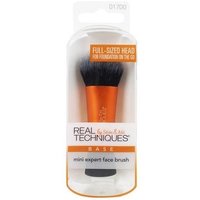

Eponge applicatrice Real Techniques avec couvercle 1pc
DocMorris FR (ex DoctiPharma FR)
Glossary
| Terme | Définition |
|---|---|
| Outlining | A structured plan that organizes ideas in writing. |
| Active Voice | A sentence structure where the subject performs the action. |
| Show, Don’t Tell | A writing technique that encourages showing rather than stating flatly. |
> 💡 Avis d'expert: En pratiquant ces techniques, les écrivains peuvent non seulement améliorer leurs compétences, mais aussi mieux captiver leur public.
📺 Ressource Vidéo
> 📺 Pour aller plus loin : Mastering Writing Techniques, une analyse complète de l’art d’écrire. Recherchez sur YouTube : "Mastering writing techniques 2026".
Questionnaire rapide
> 🧠 Quiz rapide : Quelle technique vous semble la plus essentielle pour améliorer votre écriture ?
> - A) Embrasser le pouvoir de l’outlining
> - B) Utiliser la voix active
> - C) Varier les structures de phrases
> Réponse : A — L’outlining est souvent négligé mais constitue une base solide pour tout écrit.
📺 Pour aller plus loin : Mastering writing techniques 2026 sur YouTube
Recommended products
Selected by our experts
Eponge applicatrice Real Techniques avec couvercle 1pc
DocMorris FR (ex DoctiPharma FR)